www.erikrosshagen.se
contact info[at]erikrosshagen.se


Järvaprojektet
www.jarvaprojektet.se

“Who wants to get thrown on the garbage dump?”
videoinstallation at Tensta Konsthall 20100529-20100710
http://www.tenstakonsthall.se/exhibitions/who-wants-get-thrown-garbage-dump

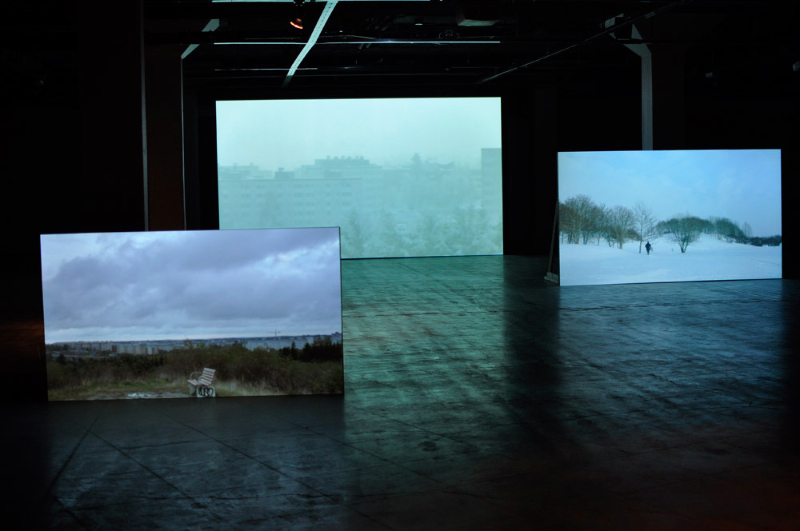
Tensta Konsthall presents the film installation “Who wants to get thrown on the garbage dump?” that is part of the ongoing Järvaproject by Patrick Kretschek, Erik Rosshagen and Fredrik Ehlin.
Who cares about a disc golf course?
The disco golf course Järva Disc Golf Park is built on top of Granholmstoppen, a the open green area in Järva just north of the Stockholm suburbs of Hjulsta and Tensta. Granholmstoppen was originally known as Granholmstippen (tippen like the English tip meaning rubbish dump) and served as a dump for rubble and leftover construction waste from the massive building project known as ‘the million program’ (the project begun in 1965 and aimed at building homes for one million people) as wells as materials from the construction of the adjoining planned subway station. Now in the spring of 2010 the sports facility’s existence is threatened and can, within four years, be forced to give way for a multicultural cemetery. To stop this from happening the driving forces behind the disco golf course, the Löf brothers, have participated anonymously, in the architecture competition for the cemetery with their own suggestion that leaves the whole area of the golf course untouched. The brothers’ strongest argument is that it’s not respectful to bury people under old construction waste. Up until the 23rd of May 2010 you can see all of the one hundred and thirteen suggestions at Ross Tensta Gymnasium.
Järvaproject is an ongoing film-, text- and research project which takes as its point of departure Järva and the residential areas surrounding: Hjulsta, Tensta, Rinkeby, Akalla, Husby and Kista. The story of the two brothers Löf, “Who wants to get thrown on the garbage dump?” which will be showing at Tensta Konsthall between the 29th of May and the 10th of July, is part of a series of stories that in the style of a Rubik’s Cube is searching for this sites’ past, current and future. In connection to already established narratives about the area The Järvaproject dwells in its margins aiming at searching new perspectives and tell different stories about the area. The focus is on events which in one way or other don’t fit in with the ideas and discourses that construct the predominant representations of the Järva area and pursue its development in certain directions. Somewhat simplified we can call that discourse the discourse of the multicultural, a construction and an affirmation of the differences in terms of culture. It’s a discourse characterised by a duality that can be used in contradictory ways. In terms of city planning an example of this is the way a multicultural graveyard is being promoted, at the same time as the plans for the extension of the tram line in the same area carefully avoids the areas of suburban housing (with the exception of the meeting point of the IT-city Kista). In these two projects the affirmation of the multicultural meets the devaluation of the social space that this diversity comprises.

Supported by Konstnärsnämnden and Stiftelsen Längmanska kulturfonden


Vita Myror/Svarta Myror

Video (24 min), together with Markus Öhrn
premiere at Tempo documentaryfestival Stockholm 20100313

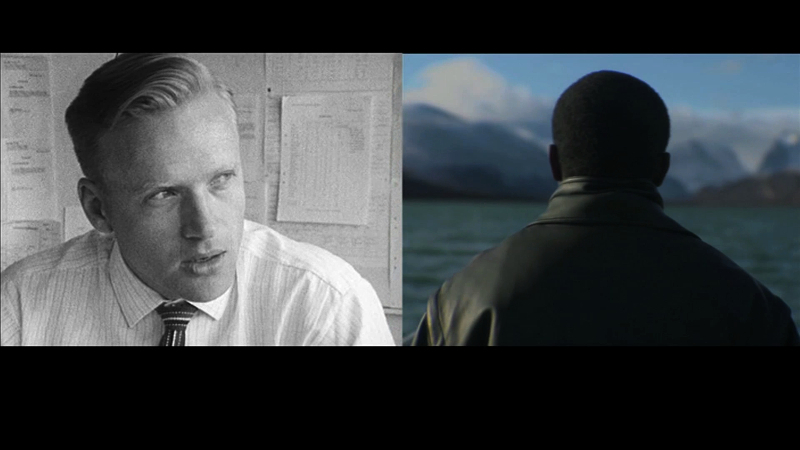
1969 gjorde Bo Bjelvenstam dokumentärfilmen Vita Myror för SVT. Filmen visar hur svenska biståndsarbetare och missionärer ingår i en europeisk härskarkultur i Kenya och Tanzania under sent 60–tal. Filmen, som bygger på intelligent journalistik blandat med närmast avantgardistiska inslag, är en postkolonial kritik före postkolonialismen. Ylva Habel menar i boken Tv-pionjärer och fria filmare att ”[Vita Myror] erbjuder ett slags vithetsanalys innan begreppet ens var myntat, främst genom att visa hur svenskar i Östafrika trädde in i den härskarställning som tidigare kolonisatörer etablerat.”
Vita myror/svarta myror återaktualiserar frågeställningarna i Bjelvenstams film, men inte genom att göra en ny fristående film, utan genom att göra ingrepp i den ursprungliga filmen med material filmat idag. Vitheten hos svenskar i Afrika på 60-talet speglas i Vita myror/svarta myror genom att lyfta fram svartheten hos afrikaner i Sverige 40 år senare. Ingreppet tar sin utgångspunkt i en omvänd rörelse av människor som sker idag, där det inte (bara) är privilegierade vita européer som reser till ett exotiskt varmt land, utan människor som flyr undan konflikter och svält i Afrika till ett europeiskt land.
Men det är inte bilden av afrikanen som ett offer vi utgår från – istället är det den svarte mannen som upptäcker och penetrerar den nordiska orörda naturen. För trots att pionjärverk som Vita myror fått mängder av uppföljare inom vad som blivit ett postkolonialt fält och trots att vi anser oss leva i ett mer tolerant samhälle idag är bilden av afrikanen som mer ociviliserad, fysisk och hotande lika stark idag som den var 1969.
Genom att lyfta fram det som Bjelvenstam, mycket medvetet, undertrycker i sin film riktas också blicken mot oss själva, publiken och Bjelvenstam som del i den koloniala härskarkultur Vita myror på sin tid avslöjade. Där Bjelvenstams film är en dokumentär skildring arbetar vi i vår spegling med en förhöjning som placerar den i en surrealistisk dokumentär tradition. Den surrealistiska dokumentären erbjuder ett alternativ – med Luis Bunuels Las Hurdes från 1933 som en tidig historisk referens – till den förhärskande narrativa realismen inom dokumentärfilmen.

KU project (Konstnärligt Utvecklingsarbete) presented at Konstfack 20101216. Text as PDF

Supported by Konstnärsnämnden and Nämnden för Konstnärligt Utvecklingsarbete, Konstfack.


Urban Nomads

Video and sound installation together with David Herdies at Informal Cities
Dieselverkstan in Nacka 20080706-20080721 and Prince of Wales Museum in Mumbai, India 20091031 – 20091108.
http://www.informalcities.org

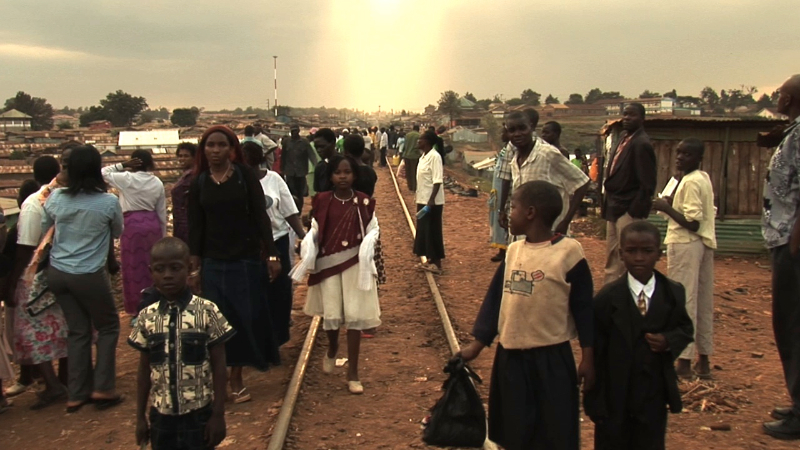
In a central projection a camera moves along the railway that cuts through Kibera, one of the largest slums in Africa, mixing staged scenes with the live environment. On a monitor shots from the occasion of shooting are displayed. Through several soundtracks, narrating stories from the place and information about the place, abstract expert knowledge is jutaposited with everyday experiences.

The text “Counterspaces” as PDF
Reportage for Kobra, SVT www.youtube.com/watch?v=w9DjM1-1mLg

Supported by Konstnärsnämnden, Royal Institute of Art and Helge Ax:son Johnsons Stiftelse.


24 rooms Nashville

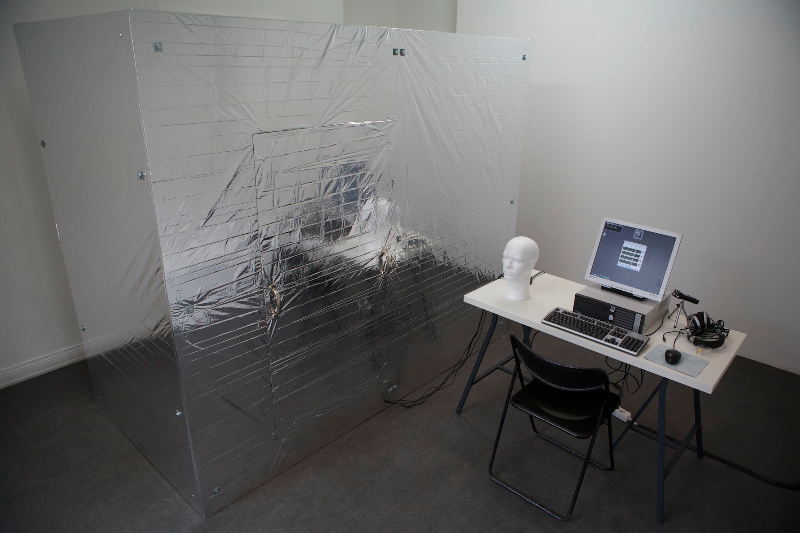
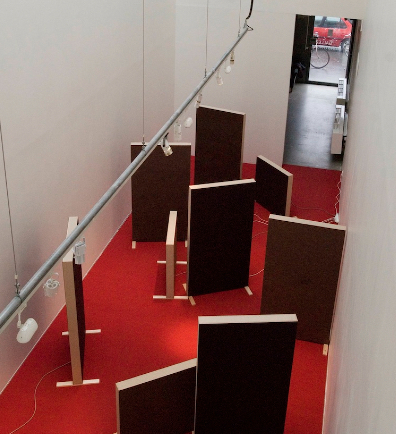
Twentyfour channel sound installation at Konstfack, 20080403-20080413 and 20080513-20080525 http://www.konstfack2008.se/fine-art/erik-rosshagen.html


Filmmakers have often represented the process of filmmaking as a process of choosing and combining images. In Nashville, Robert Altman instead models his narrative on the 24-track recording technology commonly used within the music industry by building the story around the parallel lives of 24 main characters involved in a political rally. Altman’s metaphor for cinema creation is based neither on film direction nor on cinematography, but on the process of mixing sound. Using multiple independent sound sources, Altman’s approach to sound replaces the single-channel linearity of written discourse by a three-dimensional multiplicity, calling for a radically different level and type of spectator – and especially auditor – activity. Instead of one picture following another in time, the film becomes a simultaneous space: a map or a floor plan.

The text “1974” as PDF